
PUDU · Commercial cleaning robots
PUDU CC1
Reference pudu-cc1
Switch between sweeping, vacuuming, mopping and scrubbing to suit the floor surface.
- Reference
- pudu-cc1
- Brand
- PUDU
- Category
- Commercial cleaning robots
- Model information
- 4-in-1 cleaning
- Water tanks
- 15 L for clean water and 15 L for dirty water.
- Rated runtime
- 5 hours in scrubbing mode.
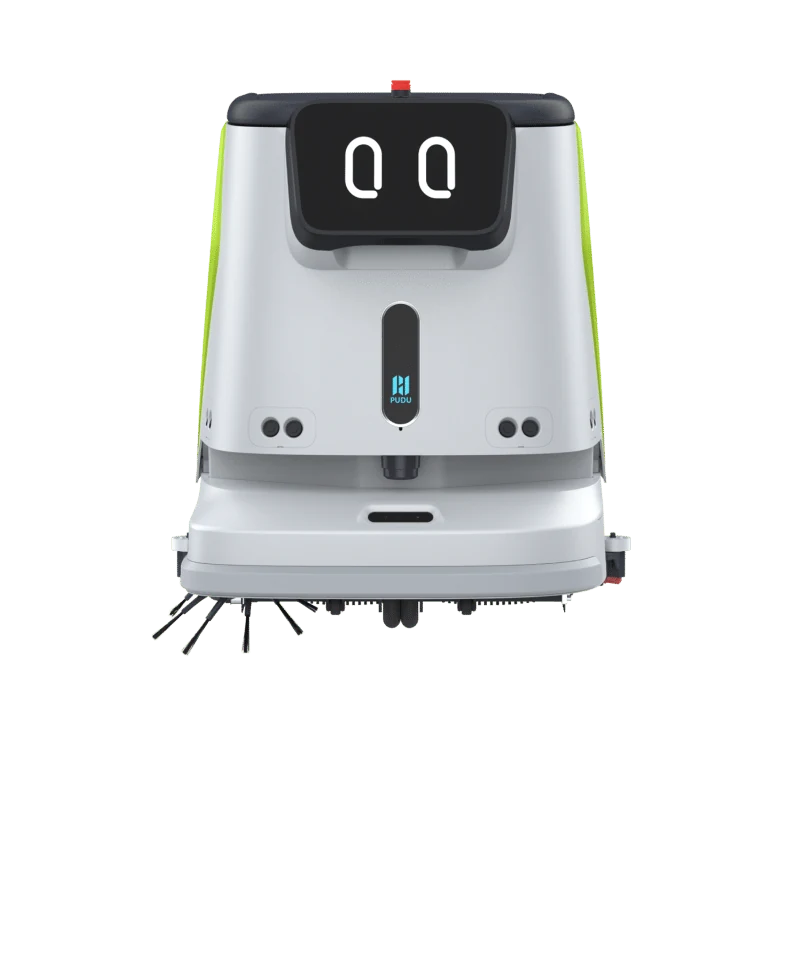
Zoom, then drag to inspect a detail. Keyboard: +, −, arrows and 0.
Product photograph. Zoom in for a closer look.
The product in detail
The PUDU CC1 combines sweeping, vacuuming, mopping and scrubbing according to configuration. Two 15 L tanks separate clean and dirty water. The manufacturer describes visual and laser navigation, mission resumption after charging and cleaning reports. Moving between hard floors and carpet requires the appropriate modules.
Listed specifications
Supplier specifications. Performance varies with configuration and conditions of use. Follow the supplied product’s manual and label.
| Specification | Listed value or configuration |
|---|---|
| Clean / waste water | 15 / 15 L |
| Listed scrubbing runtime | 5 h |
| Listed carpet vacuuming runtime | 4 h |
| Listed silent mopping runtime | 9 h |
| Listed charging time | < 3 h |
| Listed maximum suction | 17,000 Pa |
| Listed cleaning output | 700–1,000 m²/h |
| Listed cleaning noise | < 70 dB(A) |
| Maximum travel speed | 1.2 m/s |
Surfaces and compatibility
For automating a specific task on accessible routes validated on site. Check floors, debris, moving obstacles, thresholds and traffic schedules, then define exclusion zones.
The 4, 5 and 9 h runtimes refer to different modes. A station setup may automate charging, water, draining and dosing according to configuration; these functions are not assumed included with the base robot.
The carpet vacuuming module and docking stations are sold separately.
Preparation and use
- Survey the plan, widths, slopes and charging or parking locations.
- Select modules, brushes and any required water handling for the task.
- Map the site and validate routes under representative conditions.
- Assign responsibility for alerts, filling or emptying and manual intervention.
- Check cleaning quality and adjust missions using actual operation results.
Care and storage
Your team maintains sensors, brushes, filters, tanks or bins. Follow manual intervals and methods. Record alerts and include areas the robot cannot access in the overall cleaning routine.
Limits and things to check
Rated runtime and output depend on mode and test conditions. Charging, stations, obstacles and interventions reduce available cleaning time. Elevator or door connectivity requires a separate integration project.
Equipment, accessories and options
The carpet vacuuming assembly and stations are sold separately according to the manufacturer. Mobile water and docking stations have distinct functions; request configuration details.
Practical questions
How do I check whether my site suits this robot?
For automating a specific task on accessible routes validated on site. Check floors, debris, moving obstacles, thresholds and traffic schedules, then define exclusion zones.
Are all accessories and consumables included?
The carpet vacuuming assembly and stations are sold separately according to the manufacturer. Mobile water and docking stations have distinct functions; request configuration details.
What information is still needed before purchasing?
Confirm dimensions, weight, modules, stations, connections, licences and local service for the project.
Why might results differ from the listed output?
Figures describe different things: working path, theoretical or practical output, power and runtime by mode. Filling, emptying, charging, obstacles, consumable condition and technique influence actual work completed.